Physical Address
Austin, TX, USA
Physical Address
Austin, TX, USA

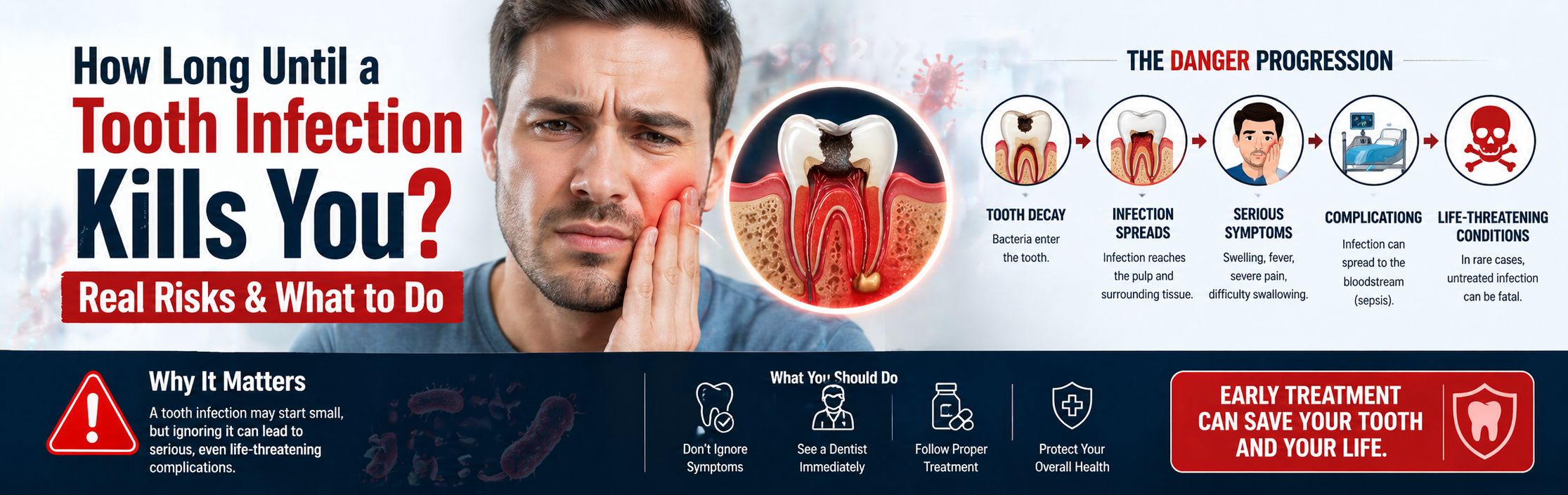
If you’ve ever searched “how long until a tooth infection kills you,” you’re likely to be worried. And that’s totally normal.
Infections to the teeth can prove uncomfortable, painful and at times severe. However, the idea that tooth infections follow a set timeline towards something dangerous isn’t the case. The problem doesn’t concern “how long,” but how an infection is spread and the extent to which it is treated.
How long until a tooth infection kills you? Learn the real risks, warning signs, and when to act in this clear and helpful guide.
An infection of the tooth, also known as a dental abscess is when bacteria invade the inside of the tooth. This is typically due to cracked teeth, cavities that are not treated as well as gum illness.
In the tooth is the soft tissue, also known as pulp. If bacteria infect this area and the infection is triggered, it begins to develop and may eventually develop pus, leading to pain and swelling.
At this point the infection is localized, but highly treatable.
Yes, but not the manner that most people imagine.
If not treated The infection will not remain in one spot. It may spread slowly beyond the tooth and into other tissues, such as the neck, jaw, or even the bloodstream in some cases.
It then becomes serious.
But this process doesn’t happen overnight. It usually takes time to develop and provides clear warning signs throughout the process.
There is no precise timeline.
In certain instances, an infection that is not treated can become worse over months or even weeks. In rare instances complications may develop faster, particularly in cases where the infection has spread rapidly.
But the most important point is:
The most serious complications usually are the result of clear signs which were either ignored or not treated.
It’s not abrupt, but it’s progressing.
Your body signals you when there is something wrong.
An infection of the tooth usually begins with pain that can be acute, throbbing or continuous. In time, additional signs could appear, including swelling of the gums or on the face.
There is also the possibility of the sensitivity of cold or hot or cold temperatures, a sour smell in your mouth or difficulties chewing.
When the infection begins to spread the symptoms may get more obvious. The appearance of fatigue, fever or swelling in the neck region are indications that the problem needs immediate treatment.
These warning signs give you the chance to act quickly.
The positive side is that tooth aches are easily treated if they are addressed in the early stages.
Dentists are able to treat the infection by performing procedures such as the root canal, or in certain cases removal of the tooth affected. The use of antibiotics is also a way to stop the spread.
After treatment the risk of developing a condition decreases significantly and the majority of patients recover without issues.
The delay in treatment is what causes risk, not the disease itself.
The act of not addressing a tooth infection can allow bacteria to spread.
In time the infection may spread beyond the tooth, and then affect the surrounding area. In rare instances it can get into the bloodstream, leading to a serious problem that requires urgent care.
This doesn’t occur without warning.
The pain is usually worsened as swelling grows and overall health starts to be impaired.
These are warnings that must never be overlooked.
Your body plays a major part in the way that an infection manifests.
A healthy immune system can reduce spreading of bacteria however, a weaker system might struggle to keep it in check.
It is also the reason that some individuals experience faster growth than others.
But, the body’s own healing isn’t enough. A professional treatment is always required.
In 2026, dentistry is more sophisticated and accessible than ever before.
The majority of illnesses can be treated quickly and effectively, typically in just one visit. Treatment for pain is more effective than it used to be, which makes the procedure more relaxing.
The belief that a tooth infection can lead to severe consequences is typically connected to situations when treatment was delayed too long.
Preventive measures are always more effective than cure.
Good oral hygiene including flossing and brushing daily can reduce the chance of developing infections. Regular dental exams help detect problems before they become more serious.
If you feel any odd swelling or pain do not hesitate to seek treatment. The sooner you act, the greater difference.
Certain situations require immediate attention.
If you’re experiencing severe swelling, breathing difficulties ou swallowing, high fever that is accompanied by dental pain, it’s crucial to seek urgent care as soon as possible.
These signs indicate that the infection is spread and requires immediate attention.
Then, how long until an infection in your tooth kills you?
The truth is that there’s no timetable that is fixed and looking at that issue can be inaccurate.
What is really important is this:
Instead of worrying about the time instead, focus on the action.
If you feel something is off having it checked out early is the best and most reliable choice.
Yes however, only in the instances of rare cases when it’s not treated for a long time.
It can vary. Certain infections are slow to progress and others can be more rapid due to health issues.
It’s not always the first time however, it tends to get worse as time passes if left untreated.
They can assist in controlling it, however dental treatment is typically required to eliminate the cause.
When you first start to feel pain, swelling or other unusual signs.