Physical Address
Austin, TX, USA
Physical Address
Austin, TX, USA


What does a cavity look like? Learn the early signs, color changes, and visible stages of tooth decay in this clear and helpful guide.
What is a cavern like?
It’s not always easy to spot. Cavities don’t always appear as large, visible holes right away. In reality, they usually start with subtle signs which are simple to miss unless you are aware of exactly what you are looking for.
Knowing the signs that are visible of cavities can help you identify problems early, reduce discomfort and serious dental problems. This guide provides everything in a simple, straightforward manner so that you can spot changes and intervene in the appropriate moment.
Cavities are tiny area of tooth decay that is caused by bacteria. The bacteria break down sugars within your mouth. They also produce acids that gradually damage the tooth’s surface.
In time, this wear and tear creates weak spots that can turn into holes if not properly treated.
Cavities can develop on the surface of the teeth and between teeth or even beneath the gum line. Their appearance is influenced by the degree of their development.
In the beginning, dental cavities can be difficult to spot.
There may be you see a white chalky spot on your tooth. This is among the first indications of weakening enamel. In this stage there’s no opening, and the damage could be reversed with proper treatment.
The surface of the tooth may appear dull in comparison other teeth. It isn’t usually painful that’s the reason that many people do not bother with the issue.
Finding a cavity in this stage makes treatment simpler.
As the decay progresses the appearance becomes evident.
The white spot could change into the appearance of a dark brown or light spot. This is a sign that enamel is breaking down even more.
At this stage, the surface could appear rough if you run your tongue across it. A few people experience a slight sensitization in the mouth when they eat cold, hot or sweet food items.
This is the time when the cavity gets more severe and requires immediate attention.
As a cavity grows it will become more noticeable.
You might notice there is a tiny pit or hole in your tooth. The color may range between dark brown and black according to the extent of decay.
Food particles can get stuck in the area faster and it becomes more difficult to clean. Sensitivity or pain may be increased, especially when chewing.
At this point professional intervention is required to avoid further damage.
The mirror does not show all the cavities in the mirror.
Cavities that develop between teeth are usually concealed from view. They are also known as interproximal cavity.
They may not be visible on the surface, but you might observe signs that include:
Dentists generally detect cavities using X-rays that expose areas that aren’t visible from the surface.
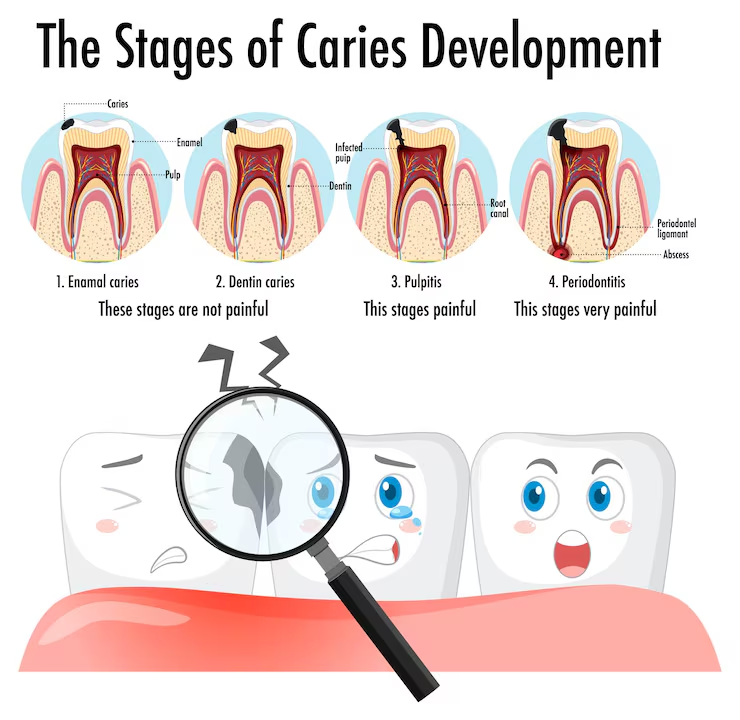
The appearance of cavities may differ based on the location of the cavity.
On the front of teeth, cavities can appear as visible marks or discoloration. Since these teeth are easy to detect the changes can be not noticed until later.
On the back teeth, dental cavities are usually formed within crevices or grooves. These places are difficult to clean, making them more susceptible to decay.
Molars in particular tend to have more cavities that are not noticed until they get larger.
Being able to recognize a cavity isn’t solely about spotting a gap.
Check for changes like:
The signs could appear slowly but noticing minor changes is essential.
Not necessarily.
In the initial stages the first stages of tooth decay, dental cavities rarely cause discomfort. This is the reason why regular dental exams are essential.
The pain usually begins when the decay begins to penetrate deeper into the tooth. In this case the tooth’s condition has advanced.
Using the sensation of pain to signal a problem could delay the treatment.
Dentists employ a variety of methods to find cavities.
The dentist will visually inspect the teeth and look for soft spots and can use dental instruments to detect any irregularities.
X-rays can be employed to find cavities that aren’t visible and are particularly noticeable between teeth.
Early detection enables an easier and less invasive procedure.
By ignoring a cavity, it allows it to develop.
As time passes the decay may get to the interior of the tooth, which can lead to an infection. This can cause extreme pain and require more complicated procedures.
What begins as a tiny spot may require more extensive treatment such as dental fillings and root canals and even removal.
Early intervention can prevent these problems.
Prevention is always simpler than treatment.
Cleaning your teeth twice per daily and flossing often assists in removing plaque and reduces the likelihood of tooth dental decay.
The restriction of sugary drinks and foods can also play a significant role. Regular visits to the dentist ensure that early signs of disease are identified before they turn into dangerous.
Simple practices can have a huge impact over the course of.
If you notice any odd changes in your teeth it is recommended to have your teeth examined.
Even tiny spots or light sensitivity may signal an early stage of decline. A quick check can determine whether there’s an issue and help prevent it from becoming worse.
In the long run, waiting can result in more complicated treatments.
Then, what does a cavity appear like?
It could begin with a small white spot, then transform into a dark spot then eventually grow into an obvious hole. The appearance of the hole changes as decay proceeds.
The trick is to spot it in the early stages.
Being aware of the signs will help you act before the issue gets dangerous. If you take care of your teeth and get prompt treatment, cavities can be treated and can be prevented.
Usually, a tiny streak of white or dullness on the tooth.
Early cavities may be seen as dark or brown spots.
Certain cavities develop between teeth, and require X-rays to determine.
But not always. The color varies based on the level of decay.
Yes, early-stage dental cavities are sometimes prevented with proper treatment.